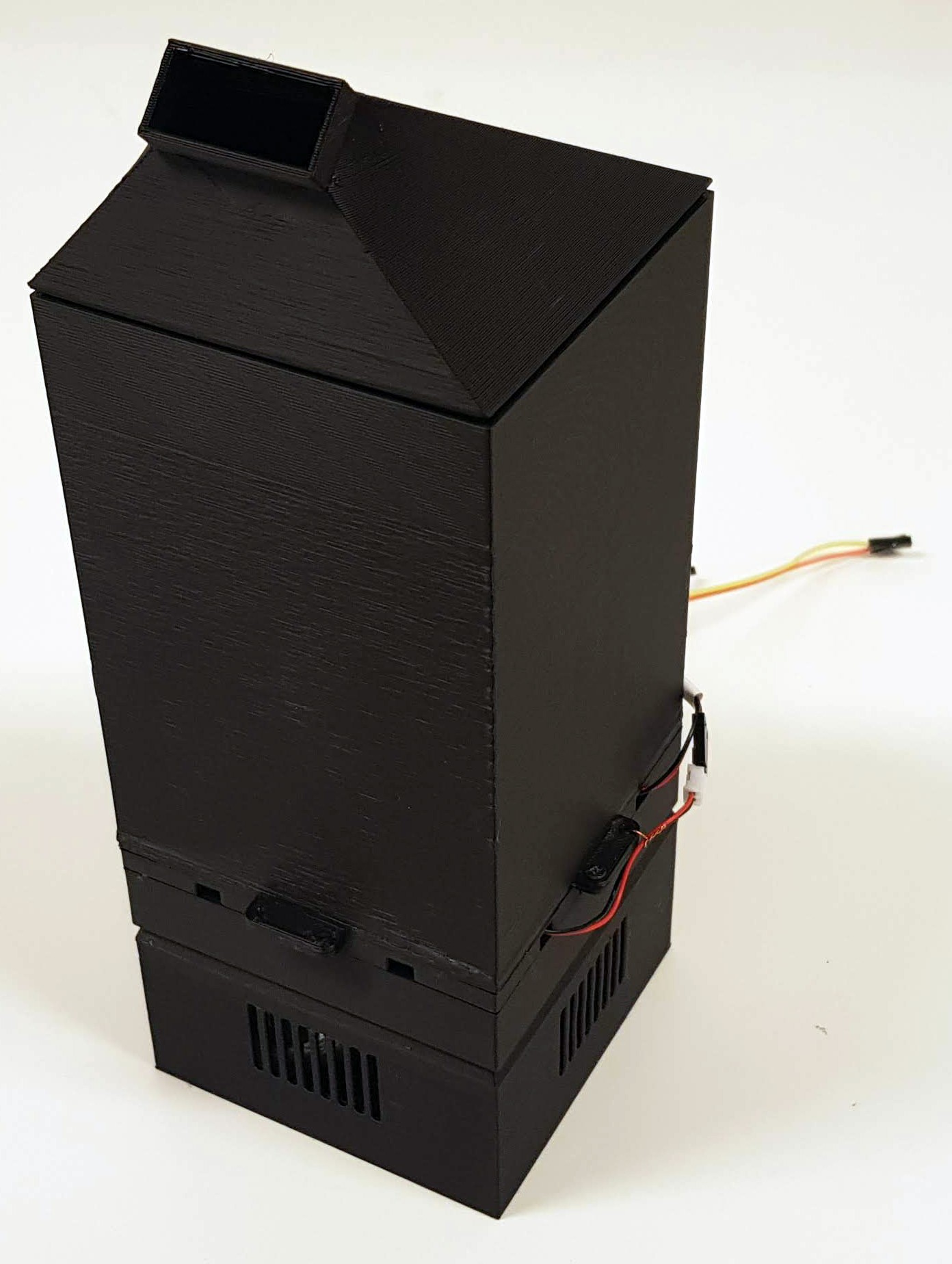
Scentony: A Device for dynamic scent mixing
Despite smell being one of the most emotional and powerful senses, olfactory interaction is rarely explored in Human–Computer Interaction (HCI). Existing scent displays fall into two camps: Simplistic: only dispensing predefined scents. High-cost & proprietary: inaccessible for researchers, with little flexibility. What was missing was an affordable, open-source system that allowed dynamic scent mixing in real time — the ability to “compose” smells as fluidly as sound or color.pensive and proprietary, lacking the flexibility to dynamically mix scents in real time.
We developed Scentony, a low-cost, open-source scent display that enables users to mix and modulate up to four scents live, like an RGB mixer for smells. It created new opportunities for research, perfumery, and multisensory experiences (e.g., gaming, training, therapy) by enabling dynamic, real-time olfactory interaction.
Foundation: Exploring the Forgotten Sense
Literature Review
Surveyed research on olfactory interaction, plus commercial/experimental scent devices:
- Unlike sound or vision, smell doesn’t reduce to “primary elements” (e.g., RGB, frequencies). It is nonlinear, context-dependent, and unpredictable.
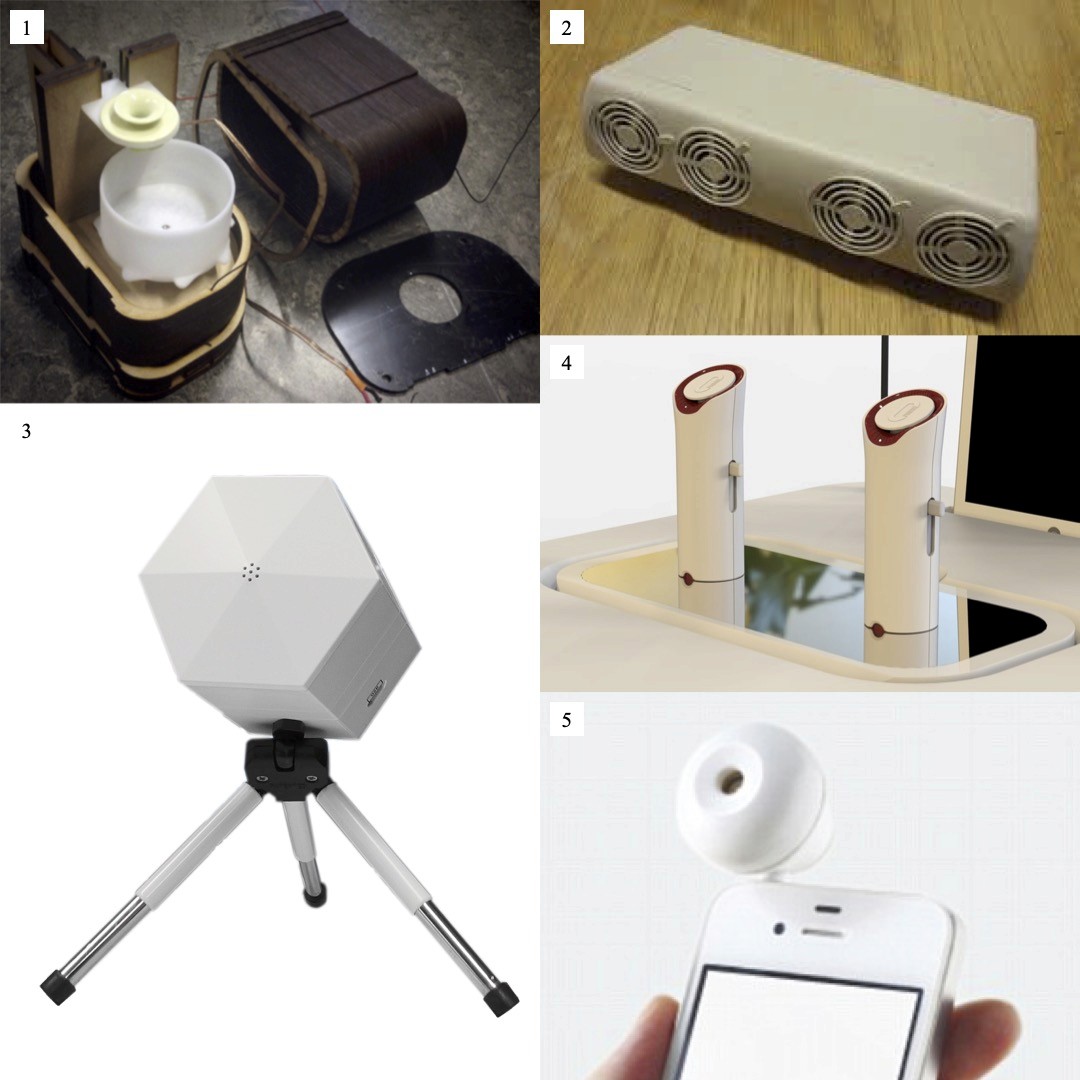
- None of the existing devices allowed for custom ratios or dynamic blending:
- Hajukone (1): mechanical revolver, no mixing.
- Vortex Active (2), Aroma Shooter (3): multiple scents, but only equal intensities.
- oPhone Duo (4), Scentee Balloon (5): large libraries, but no live mixing.
Takeaway
Instead of simulating all possible smells, the device should provide a flexible system for blending carefully chosen scent components in real time.
Opportunity Space
- Gaming: integrate scent into gameplay mechanics (e.g., detective tracking).
- Research & Therapy: affordable scent training tools for clinicians.
- Perfumery: live prototyping of blends instead of manual evaporation tests.
Prototyping
Key functions to prototype
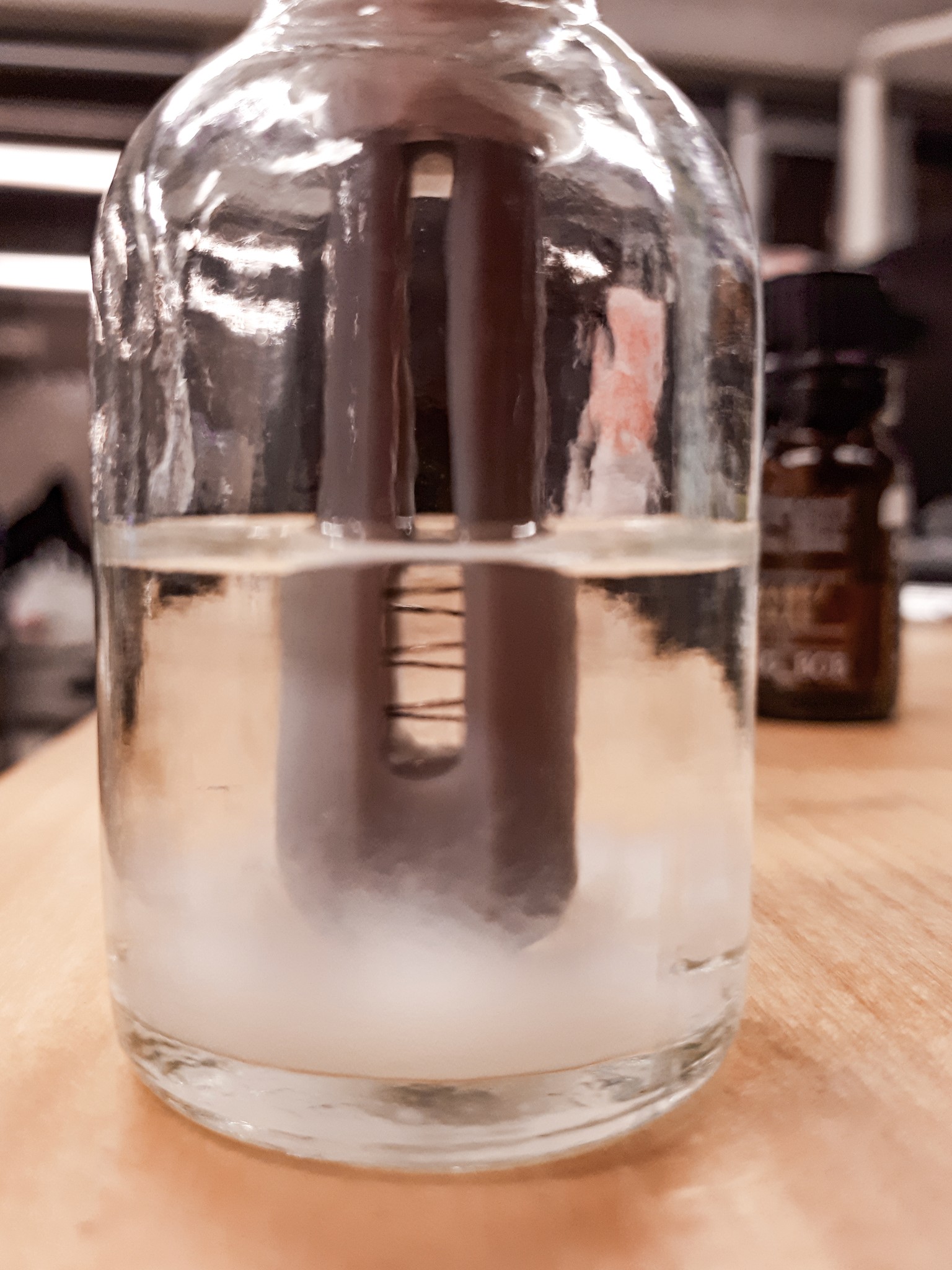
- Scent solutions: mixing essential oils in alcohol base in different percentages until achieving the ideal mix
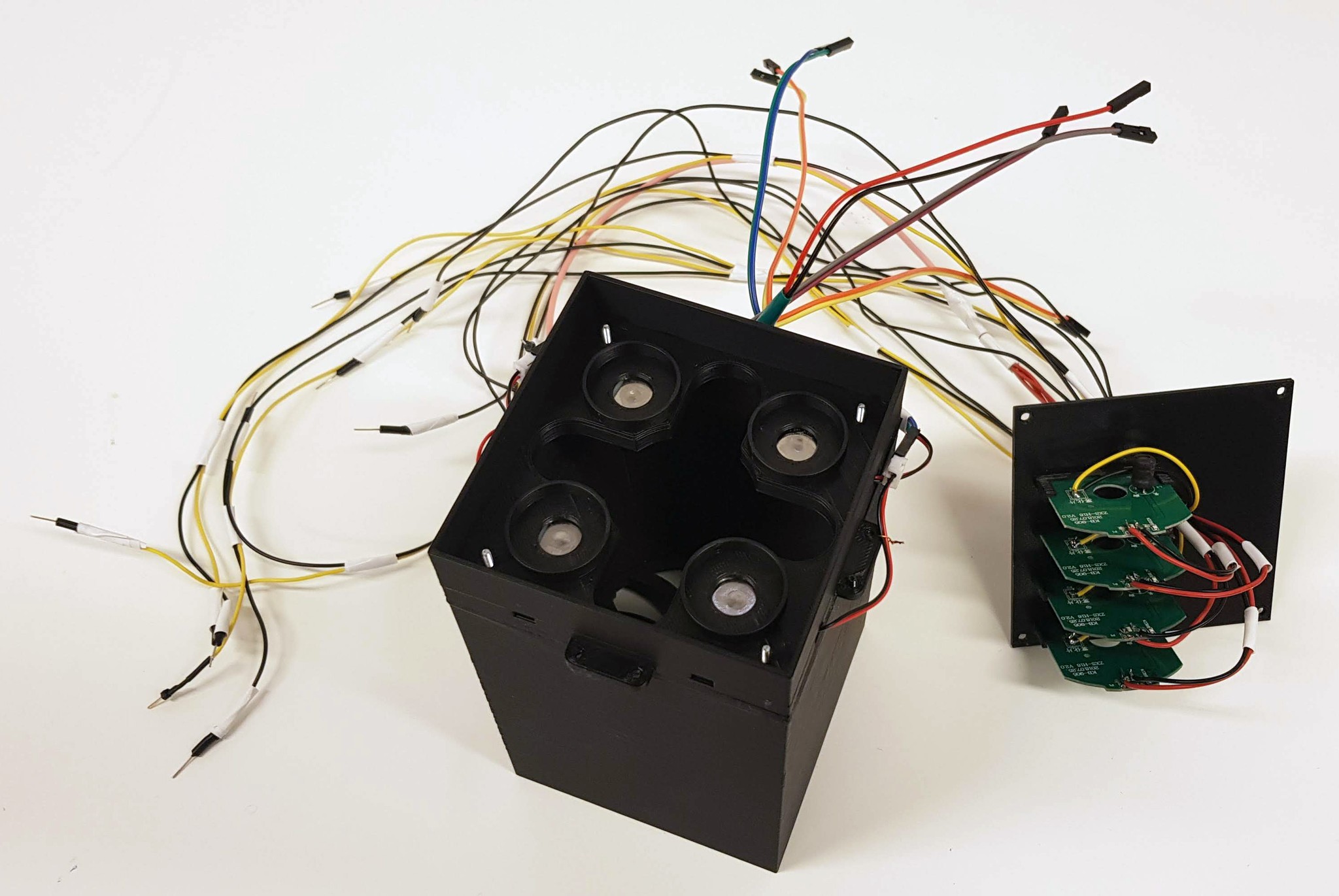
- Vaporisation technique: experimenting with piezo dispensers
- Delivery: the fanning and tubing system
- Input: a way for users to mix the scents
- Microcontroller: to control and bring the different element together
Scent solutions
- Essential oils in perfumer’s alcohol (ethanol) base.
- Tested a range of concentrations to balance subtlety and recognisability.
Vaporisation technique
- A vaporising device is needed to be small, easily controlled and responds quickly
- Tested multiple options; ultrasonic piezos chosen as the best fit..
- Learning: cheap components cost more in time/frustration when debugging.
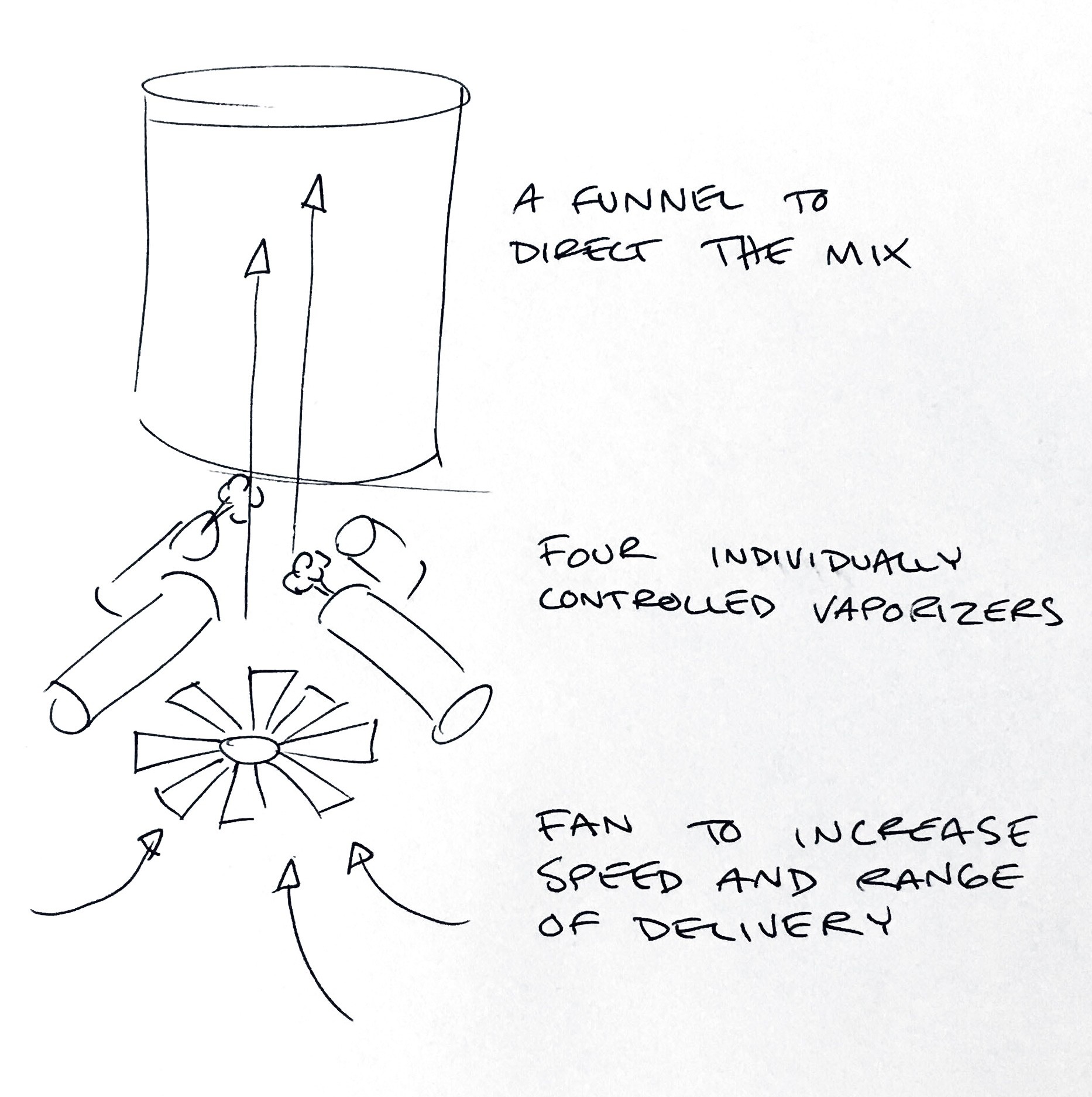
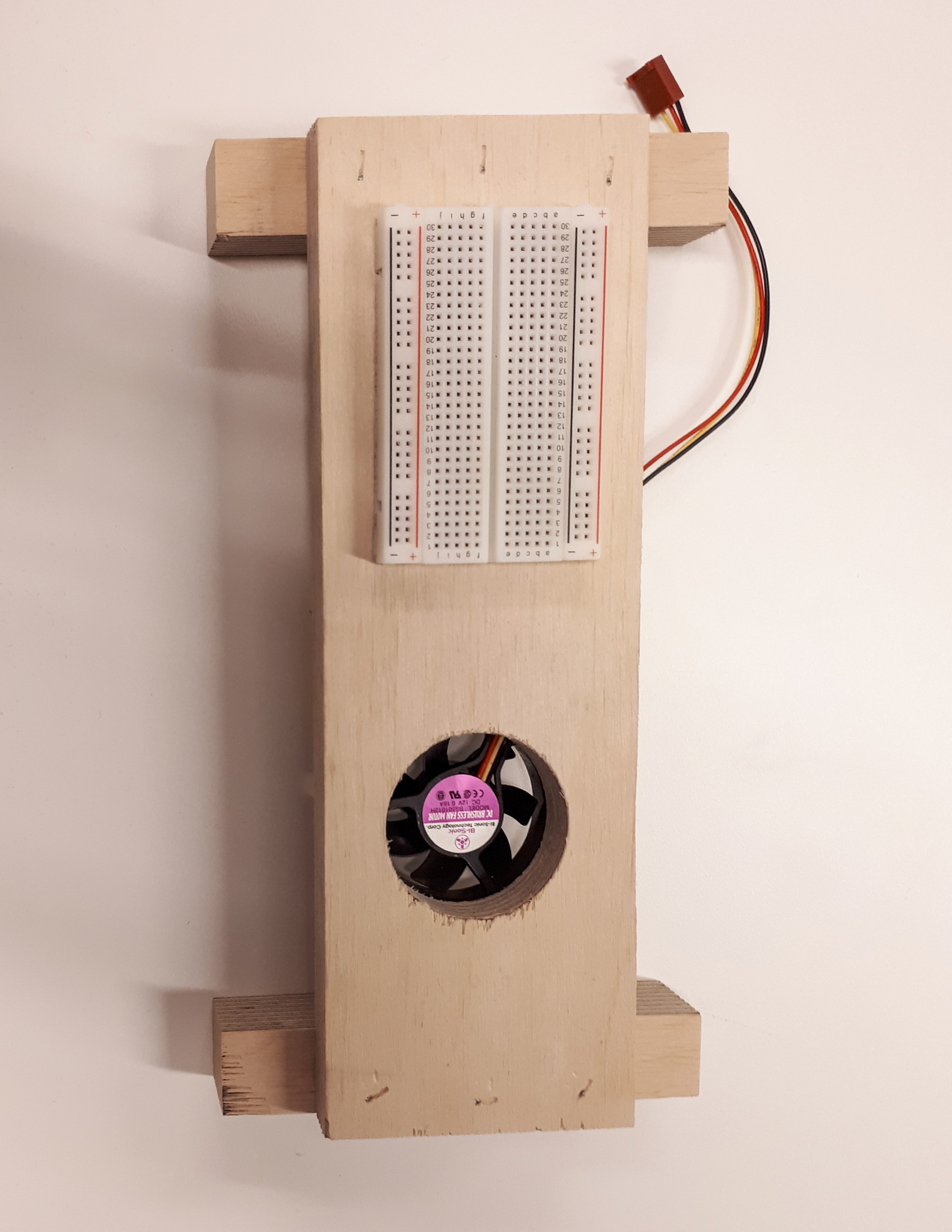
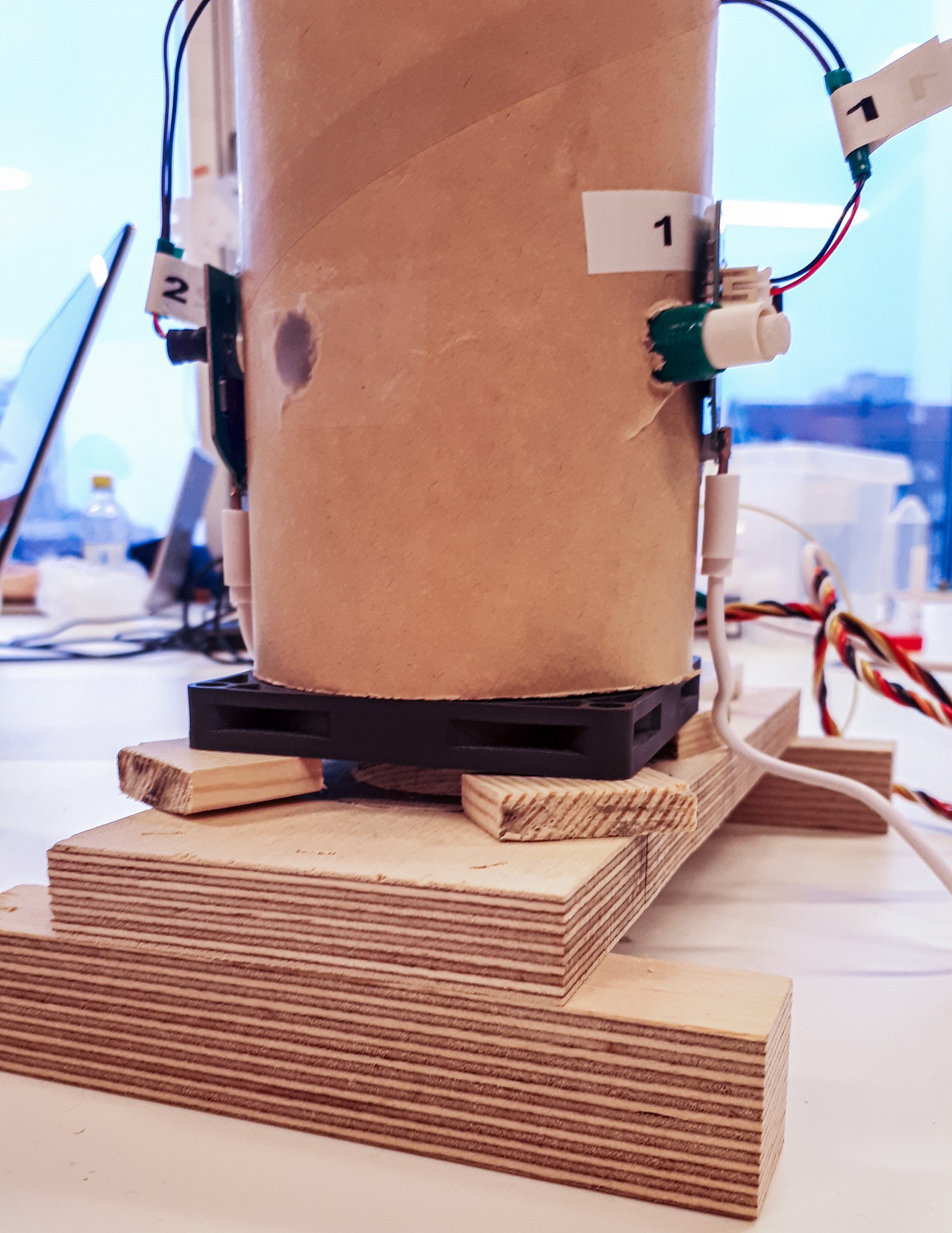
Scent Delivery
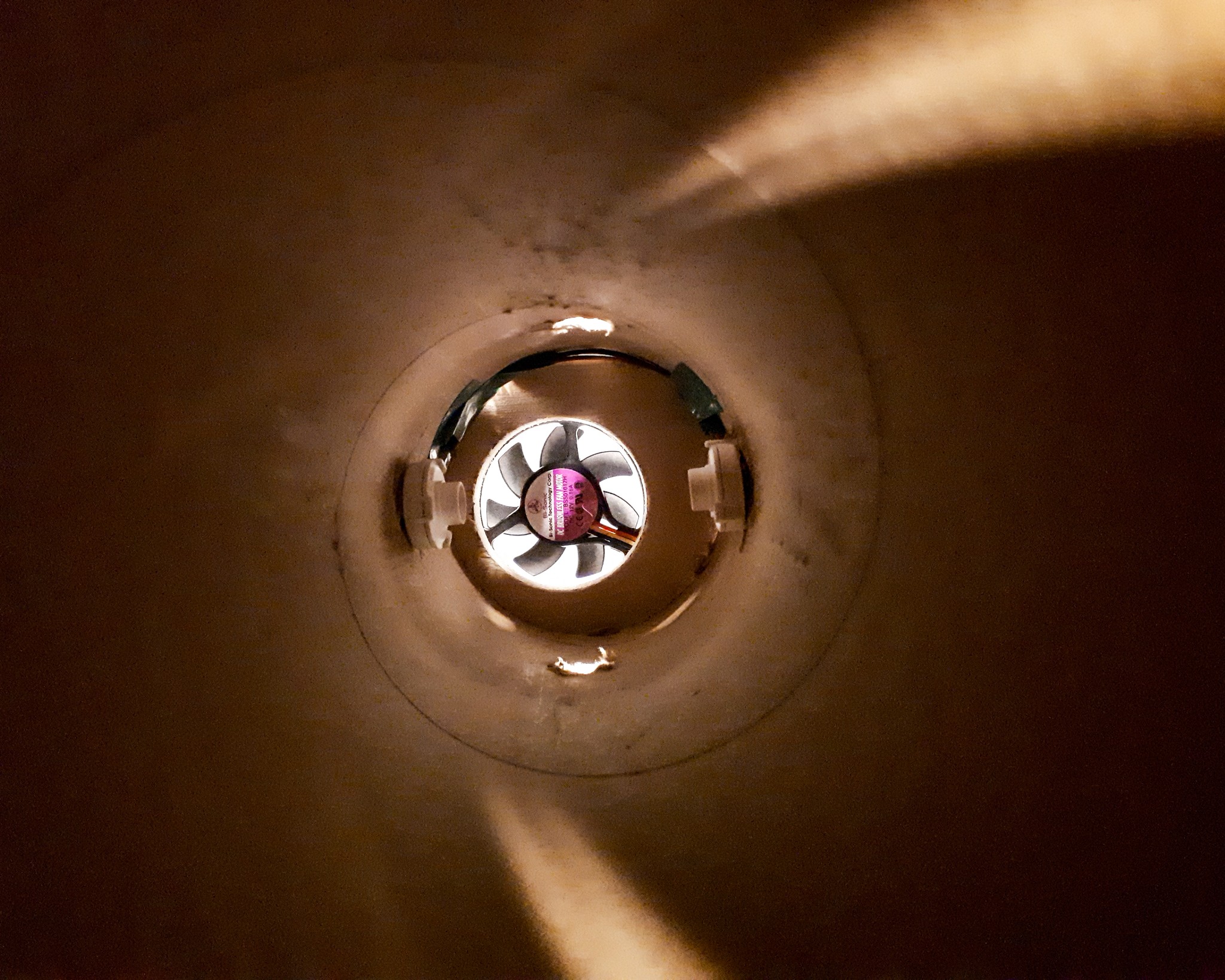
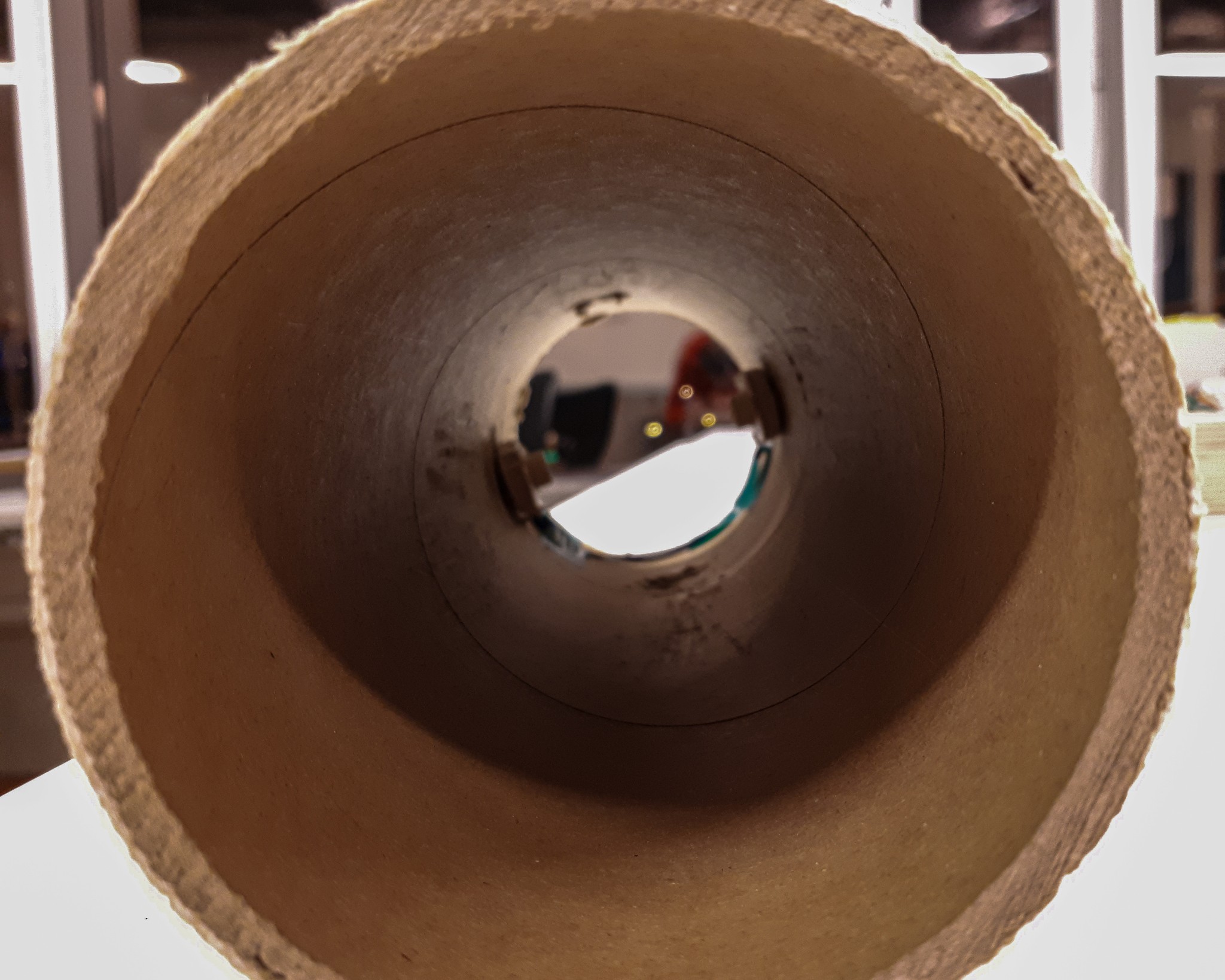
- A type of funnel is needed for the scents to mix in and get directed
- Placement of fan critical: affected scent mixing and latency.
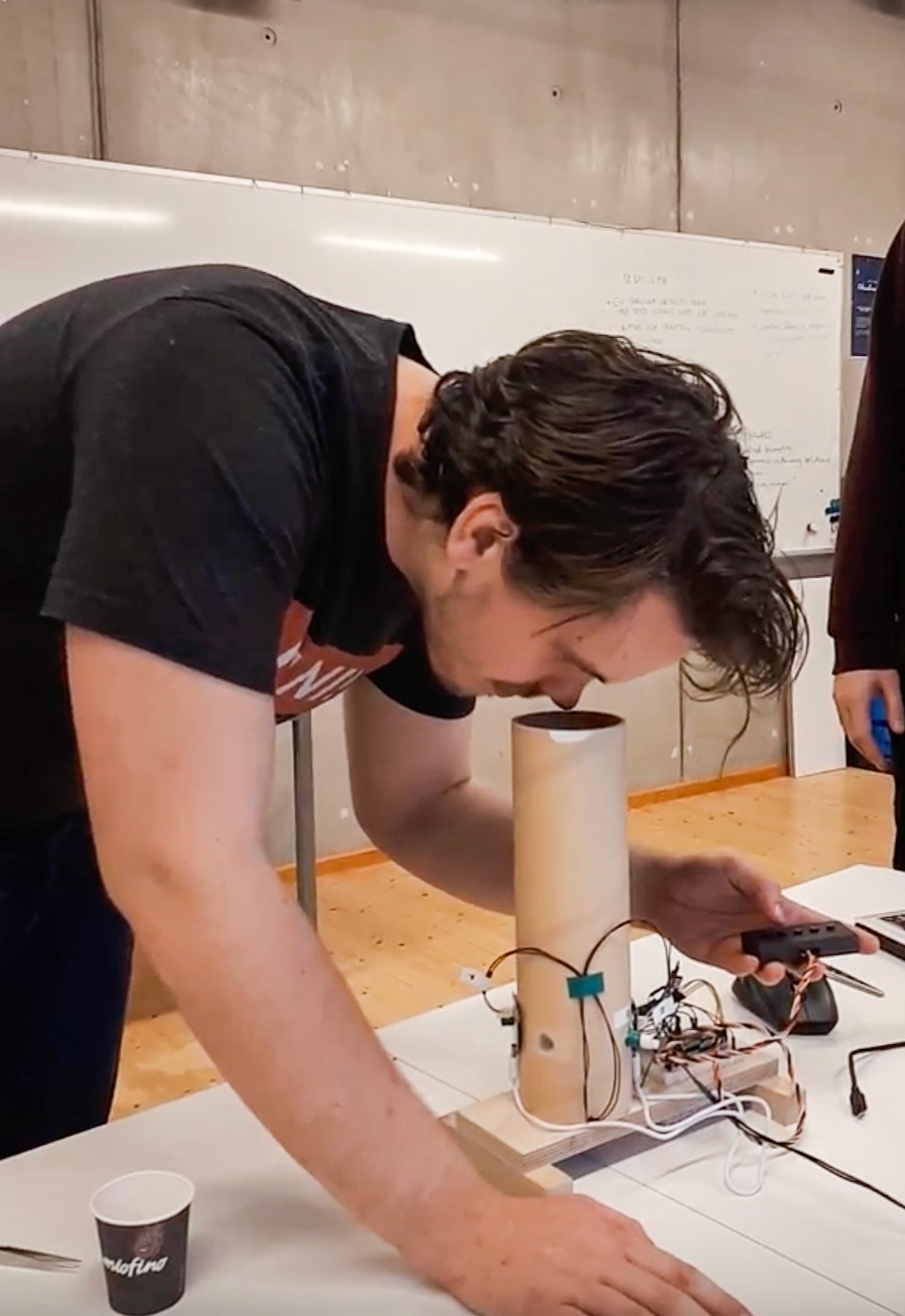
- To test different placements, we needed an easily manipulable material and found hard cardboard to be a good choice
- Learning: prioritising iterative low-fi prototyping saves time and reveals hidden challenges early.
Input & Microcontroller
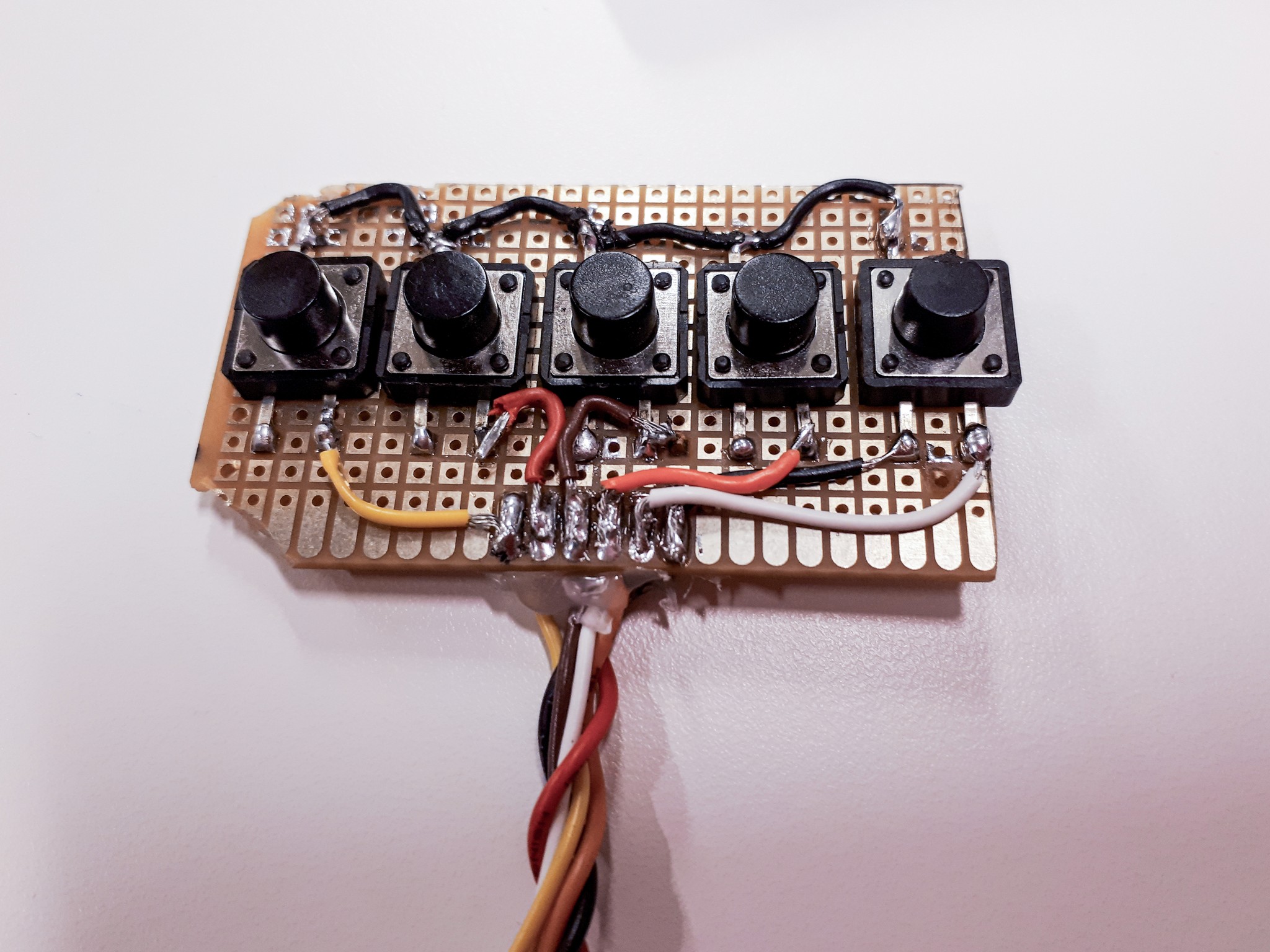
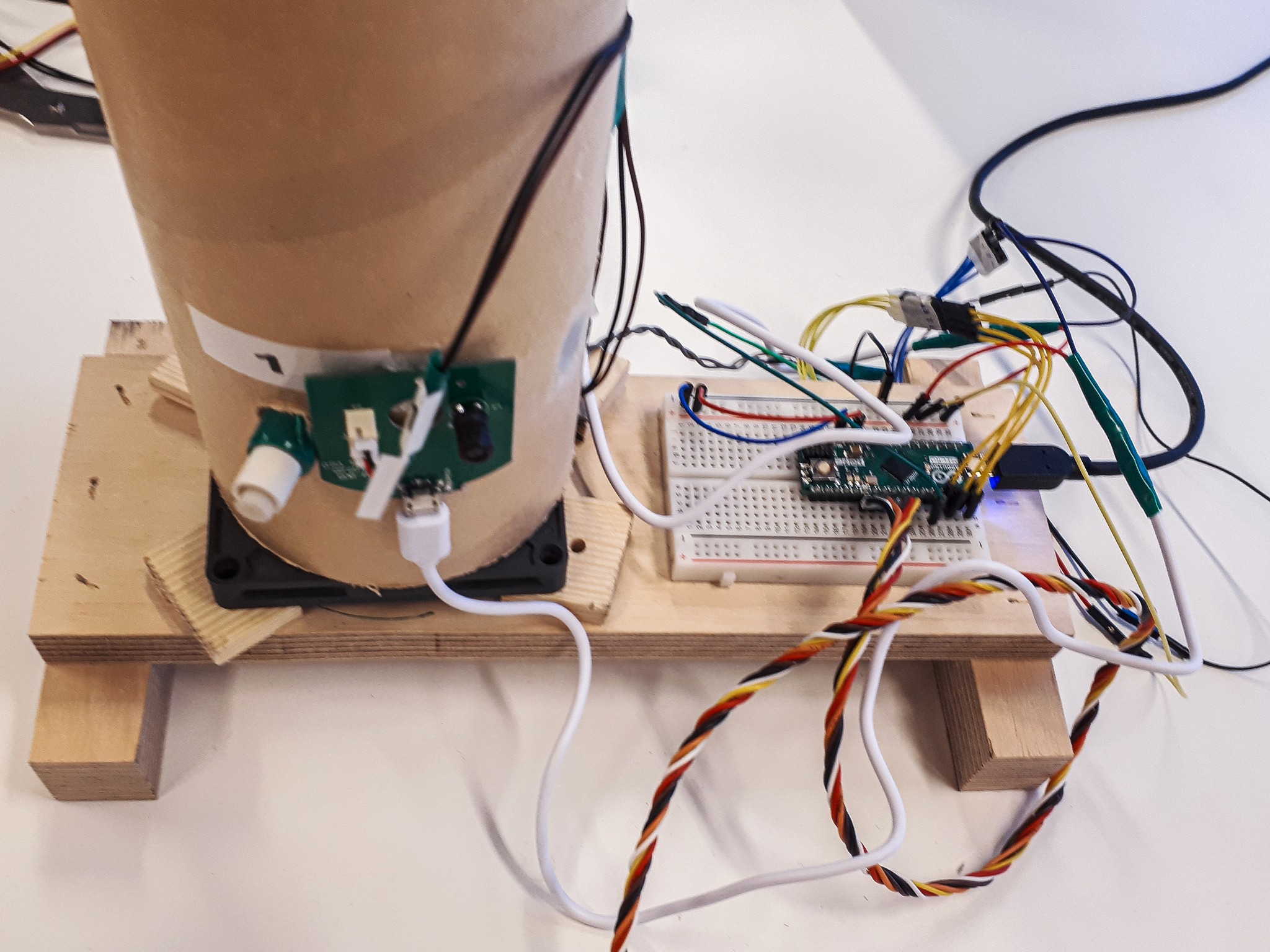
- Chose Arduino Micro for compact size and expandability.
- Limited test setup to two scents + 5 preprogrammed mixes (0–100, 25–75, 50–50, 75–25, 100–0).
- Learning: prototyping is a science expirement where one has to control variables and eliminate any extra features that could influence the tested subject
Usability Testing
setup
- 8 user sessions.
- Tasks:
- Identify base scents individually.
- Identify randomised mixes (15 trials each, some repeated to avoid bias).
- Logged accuracy, recognition time, and qualitative feedback.
Findings
- Mixing: Users correctly identified dominant-ratio mixes (0–100, 25–75, 75–25, 100–0).
- 50–50 mix often confused for a “new scent.”
- Proof that the system achieved true blending rather than overlay.
- Delivery:
- Fan at bottom: poor mixing, delays.
- Fan at top: created a vortex, improved blending speed.
- Other notes: Cardboard tube absorbed scent → background smell interference.
Iteration: user-driven improvements
User-driven improvements
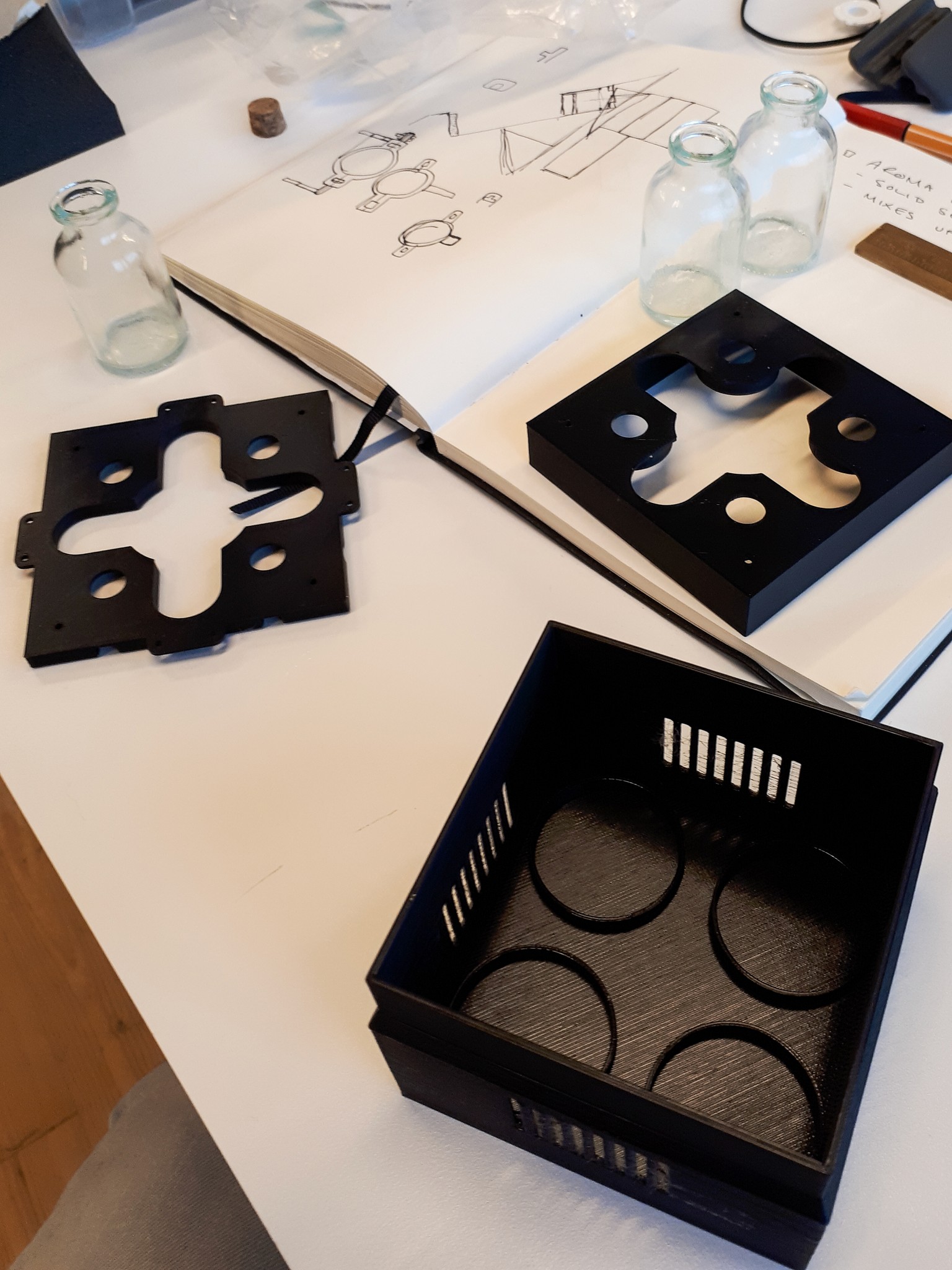
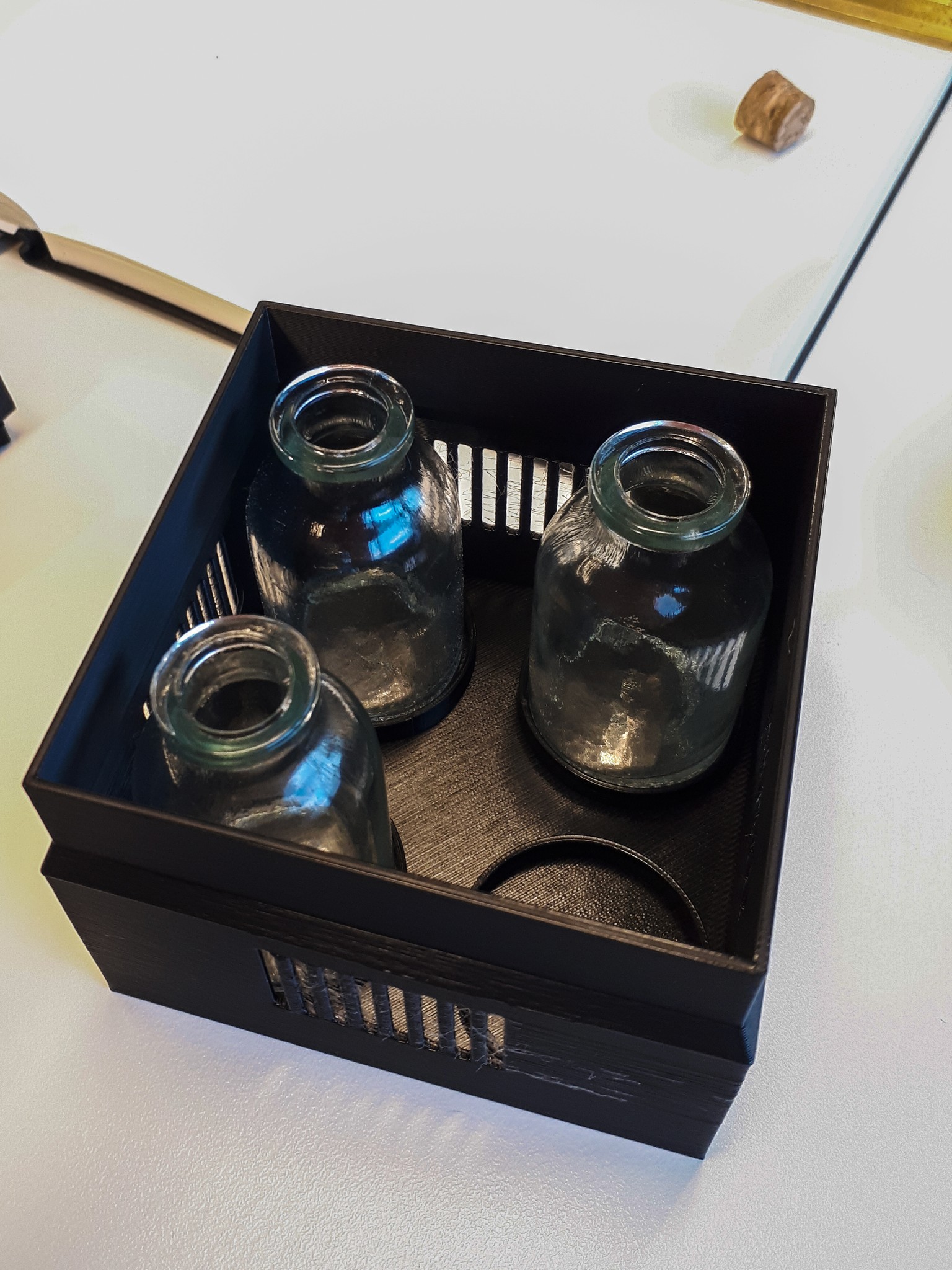
- Placing scent bottles on one horizontal level.
- Switching to less absorbent materials.
- Moving fan placement to top of funnel.
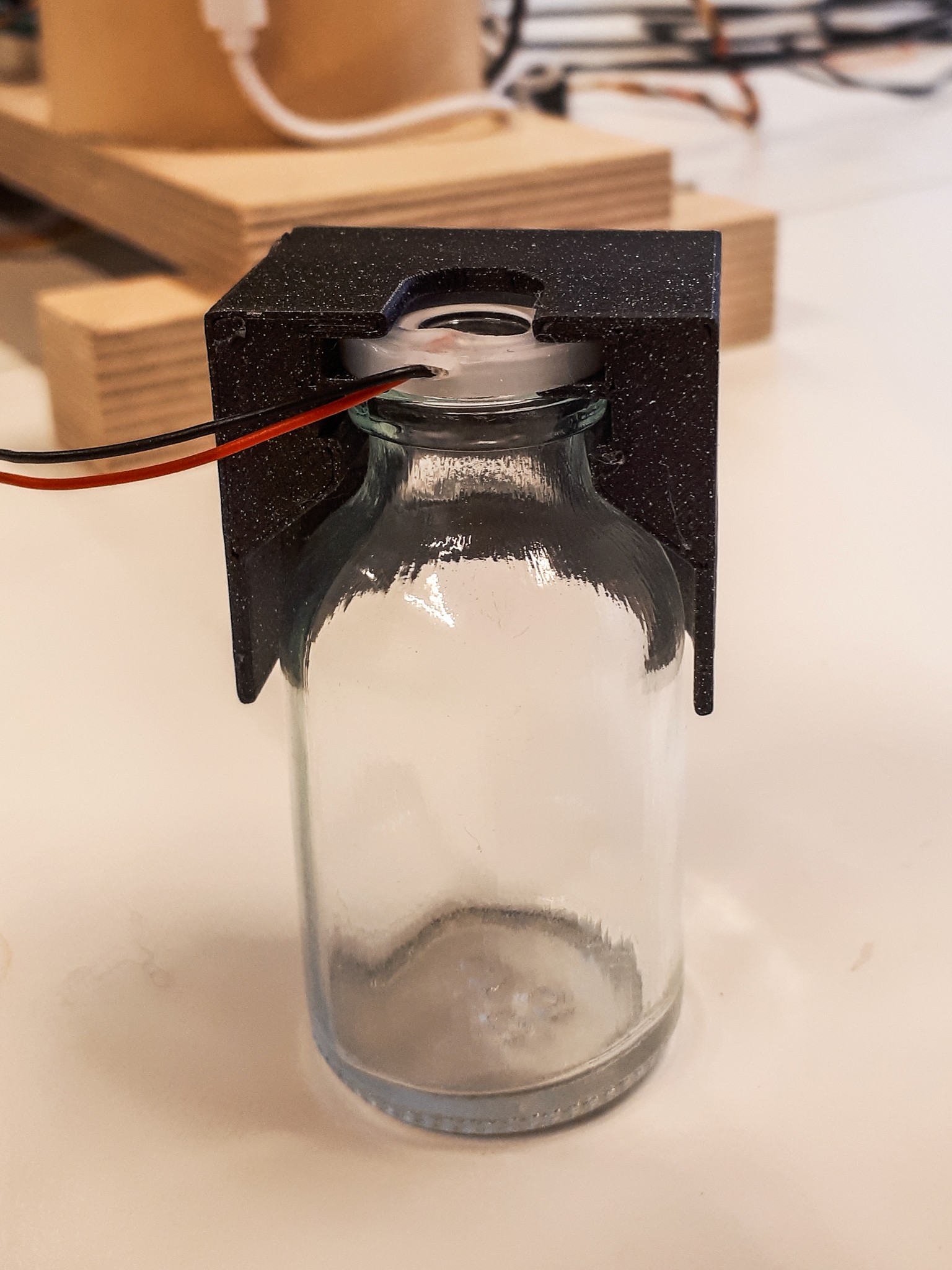
- Isolating piezos from bottles (custom holders).
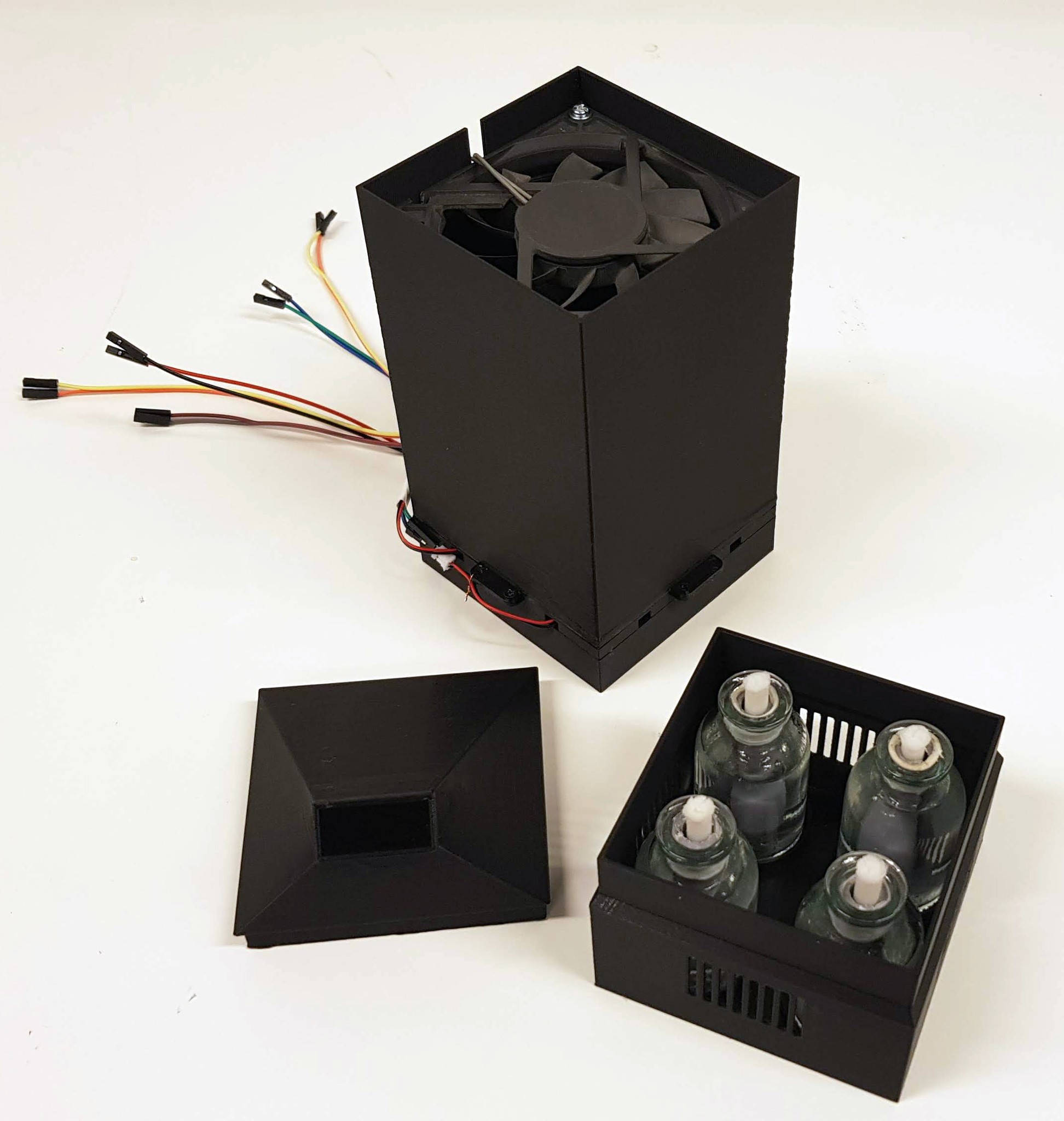
- Clear, modular setup: up to 4 bottles inserted, scents delivered via cotton sticks to piezos.
The workflow
The user's setup journey consists of the following steps:
- Insert bottles into numbered slots (up to 4).
- Place the funnel of the device on top of the scents' holder box.
- Plug in.
- Use buttons to select preprogrammed mixes.
- Optional funnels added depending on use case.
Outcomes & Future Iterations
Reflection
Through Scentony, I learned to:
- Work within the constraints of nonlinear, unpredictable sensory design.
- Developing a tangible product from start to finish.
- Use iterative low-fi prototyping to resolve engineering challenges early.
- Apply controlled user testing to evaluate highly subjective experiences like smell.
- Deliver an open-source, flexible prototype that researchers and designers can build upon.